

Choosing the right primary school can feel like one of the biggest decisions you make for your child. These early years shape how children see learning, relate to others, and build confidence in themselves. In a city as dynamic and diverse as Bangalore, parents are spoilt for choice, yet the abundance of options can make it harder to know what truly matters. A glossy brochure or a modern building alone cannot guarantee the environment your child needs.
Instead of searching blindly, approaching school admissions with the right questions gives you clarity and confidence. When you know what to ask, you can look beyond marketing lines and understand how a school really functions day to day. This guide walks you through eight essential questions that help you identify whether a school is genuinely aligned with your child’s growth, well‑being, and long‑term success.
1. How does the school define and deliver learning in the foundational years?
Before you label any institution as the top primary school in bangalore, it is important to understand what “learning” means in their context. Ask how the school balances conceptual understanding, hands‑on activities, and real‑world application. Foundational years are not just about finishing a textbook; they are about building curiosity, language skills, number sense, and the confidence to express ideas. When teachers focus on how children think, not only on what they remember, early learning becomes meaningful and lasting.
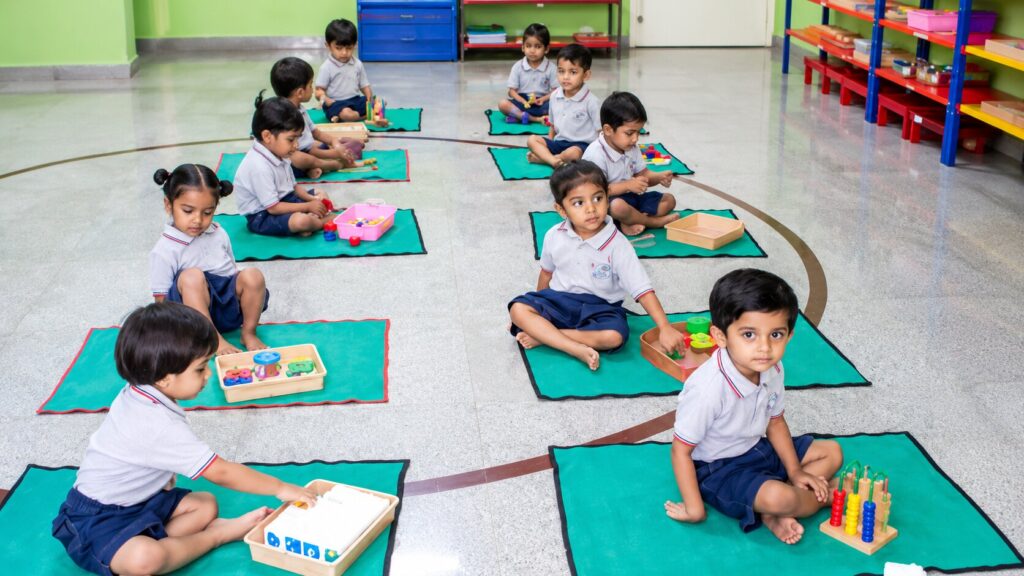
Explore whether the school uses age‑appropriate, research‑backed methods rather than relying purely on rote practice. For instance, a strong primary programme usually combines structured lessons with discovery‑based tasks, group work, and projects. This approach helps children connect academics with everyday life and makes them more willing to attempt new things. You should also ask how learning outcomes are measured and how teachers respond when a child struggles with a concept, as this reveals how supportive and flexible the school truly is.
2. What is the school’s approach to the National Education Policy (NEP) 2020?
The NEP 2020 has reshaped how schools across India think about curriculum, assessment, and skills. When you speak with schools in Bangalore, ask specifically how they have implemented this policy rather than accepting a generic statement. A thoughtful school will be able to explain how NEP principles are reflected in classroom practices, assessment design, and exposure to different skill areas beyond academics. This shows that they are future‑oriented and committed to aligning education with broader national goals.
Look for details: How often is learning interdisciplinary? Are children encouraged to ask questions, work in teams, and present their ideas? Do teachers receive training to adapt to these reforms? Schools that actively adopt NEP guidelines typically create an environment where continuous improvement is encouraged and children feel comfortable exploring varied interests. This clarity on NEP implementation can give you confidence that the school is not only compliant, but intentional about the way it evolves.
3. How are teachers selected, trained, and supported?
Primary school teachers play a crucial role in shaping a child’s attitude towards education. When evaluating a school, ask about teacher qualifications, recruitment processes, and ongoing training. A strong institution will not hesitate to explain how they ensure teachers understand child psychology, modern pedagogy, and inclusive classroom practices. The early grades need patient, observant educators who can differentiate instruction and recognise each child’s pace of learning.
It is equally important to understand how teachers are supported once they join. Regular workshops, mentoring, and feedback systems help staff refine their skills and stay updated with best practices. Ask how often teachers collaborate, share ideas, and discuss students’ progress. When a school invests in its teachers consistently, children benefit from stable, thoughtful guidance instead of fragmented or outdated methods. The way the management speaks about teachers can itself reveal whether they are valued as long‑term partners or treated simply as employees.
4. What does the school environment feel like on a typical day?
Beyond brochures and websites, the actual atmosphere of a school is best understood by visiting the campus. When you tour a school, observe how children and adults interact. Are students engaged, relaxed, and eager to participate? Do teachers appear approachable and attentive? A healthy environment combines structure with warmth: clear routines, but also open communication and smiles in the corridors. This is especially vital in primary years, when children are learning to manage emotions and social relationships.

Ask about class sizes and how discipline is maintained. A good school usually relies more on positive reinforcement and clear expectations than on fear‑based rules. Notice the physical space: classrooms should be age‑appropriate, well‑lit, and organised to allow both movement and focused work. Outdoor areas, reading corners, and activity rooms signal that the school respects children’s need for variety and play. When you leave the campus, you should have a sense of whether your child would feel safe, seen, and motivated there.
5. How are academics balanced with co‑curricular and skill‑based activities?
Parents naturally care about academic performance, but primary education must go beyond marks and rankings. Ask schools how they integrate sports, arts, and other activities into the timetable rather than treating them as optional extras. A strong programme recognises that physical fitness, creativity, and social skills directly support academic achievement by building focus, resilience, and confidence. Children who play, perform, and create often show better problem‑solving and communication abilities in class.
Clarify whether activities are available to all students or only to a select group. In the best environments, every child gets opportunities to try different domains and discover personal strengths. You can also ask how the school identifies and nurtures specific talents, such as music or athletics, without overwhelming the child. When a school views co‑curricular participation as part of holistic development rather than a mere showcase, you are likely to see more balanced, happy learners in its classrooms.
6. How does the school involve and communicate with parents?
Strong schools recognise parents as partners rather than spectators. Ask about the communication channels the school uses: regular meetings, progress reports, phone calls, or digital platforms. Effective communication is honest, timely, and focused on solutions. Instead of merely listing grades, the school should share insights into your child’s strengths, areas for improvement, and suggested strategies at home. This builds trust and ensures that the child receives consistent support from both school and family.
You can also enquire about how parents are involved in school life. Are there orientation programmes, workshops, or open days where families can understand teaching methods and expectations? A well‑managed school sets clear boundaries while still offering parents meaningful ways to engage with their child’s learning journey. When parent‑school collaboration is grounded in respect and shared responsibility, children benefit from a stable, encouraging network around them.
7. What systems ensure student safety, well‑being, and emotional support?
Safety is more than having a gate and a guard. When you speak with school administrators, ask about specific measures: trained staff, supervision practices, emergency protocols, and health facilities. In primary years, children need constant, mindful oversight in classrooms, corridors, playgrounds, and transport. Clear rules about movement, visitor access, and authorised personnel help prevent confusion and ensure that children are protected throughout the day.

Equally important is emotional safety. Ask how the school handles issues like bullying, exclusion, or anxiety. Are counsellors or trained teachers available to guide children during difficult phases? Are students encouraged to talk about their feelings and seek help without fear of judgment? Schools that prioritise emotional well‑being typically create a culture where kindness, respect, and empathy are actively taught, not just mentioned in policy documents. Over time, this leads to a healthier peer environment and more confident, secure children.
8. How transparent is the school about fees, policies, and long‑term plans?
Transparency is a practical but often overlooked factor in choosing a primary school. Ask for a clear breakdown of fees, including tuition, transport, uniforms, and any additional charges. A trustworthy institution will provide detailed information upfront rather than leaving you to discover hidden costs later. Understanding the financial expectations helps you plan better and avoids unnecessary stress during the school year.
Beyond fees, enquire about admission policies, promotion criteria, and how the school handles transfers or changes. It can also be helpful to know the school’s long‑term vision: Are higher grades being added? Are facilities being expanded? Schools with a coherent plan for the future tend to invest consistently in infrastructure, training, and programme quality. When management communicates openly and responds thoughtfully to your questions, you gain confidence that they value accountability as much as you do.
Conclusion
Selecting a primary school in Bangalore is not about chasing labels or following trends; it is about aligning your child’s needs with the school’s philosophy, environment, and everyday practices. By asking these eight questions, you move beyond surface impressions and understand how a school truly operates. You learn whether it is committed to holistic growth, whether its teachers are supported, and whether its systems genuinely protect and nurture young learners.
Ultimately, the “best” school is the one where your child feels encouraged to explore, think independently, and grow with joy. Take the time to visit campuses, speak with staff, and listen to your instincts as well as the answers you receive. When your decision is guided by careful questioning and thoughtful reflection, you give your child not just a school, but a strong foundation for a confident, purposeful future.